

Most engineering organizations are familiar with Technology Readiness Levels (TRLs) and Manufacturing Readiness Levels (MRLs).
TRLs answer the question:
Can we make the technology work?
MRLs answer another equally important question:
Can we manufacture it consistently?
Both are critical to successful product development.
But there is another question that often receives far less attention:
What ensures a product is engineered well enough to make the transition from Technology Readiness to Manufacturing Readiness?
In many organizations, engineering assurance activities exist, but they often operate independently of the readiness journey itself.
- Design reviews.
- Design Failure Mode & Effects Analyses (DFMEAs).
- Engineering risk assessments.
- Requirements verification.
- Failure analysis.
These are all valuable engineering disciplines. However, when they are treated as isolated activities rather than integrated elements of product development, important engineering risks may remain hidden until later in the program.
The consequences are familiar across the industry:
- Technical risks discovered after major design decisions have been made
- Costly redesigns late in development
- Manufacturing challenges that could have been prevented
- Increased schedule and program risk
- Reduced confidence entering production
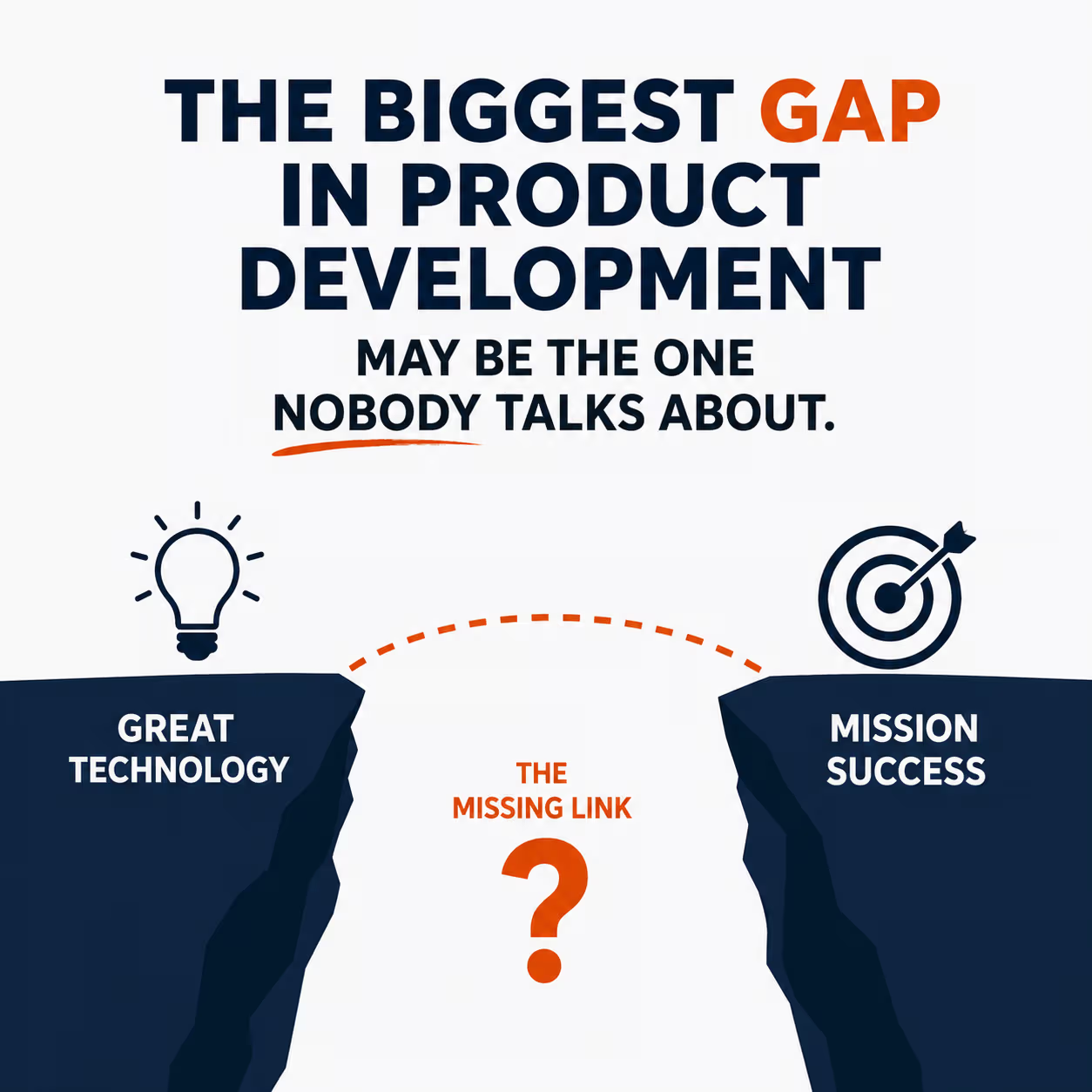
Technology readiness alone does not ensure engineering readiness.
Likewise, manufacturing readiness alone does not guarantee a robust design.
At Fortitron, we believe engineering assurance should serve as the bridge between Technology Readiness and Manufacturing Readiness, providing continuous visibility into engineering risk throughout the product development lifecycle.
That's why we developed FERF™ (Fortitron Engineering Readiness Framework).
FERF™ integrates:
- Technology Readiness (TRLs)
- Engineering Assurance
- Manufacturing Readiness (MRLs)
into a single framework that helps engineering organizations identify engineering risks earlier, improve product robustness, strengthen engineering decision-making, and transition into manufacturing with greater confidence.
Because the journey from innovation to production is not defined by technology alone.
Nor is it defined solely by manufacturing capability.
Engineering assurance is the critical link that connects them.